Should You Put Neosporin on a Wound?
Medically reviewed by Gunjan Modi, MD, FAAD, FACMS, board-certified dermatologist and fellowship-trained Mohs surgeon · Updated August 30, 2026
The short answer
For most clean wounds, no. Dermatologists generally recommend plain petrolatum (plain Vaseline) instead. Two of Neosporin's antibiotics — neomycin and bacitracin — are among the most common causes of allergic contact dermatitis, an itchy rash that is easily mistaken for a wound infection. For clean wounds, research shows the antibiotic adds no protection that plain petrolatum does not already provide.
Why dermatologists say no
Neosporin is a triple antibiotic ointment: neomycin, bacitracin, and polymyxin B. Two of the three are notorious in dermatology. Neomycin and bacitracin rank among the most common causes of allergic contact dermatitis in the United States — each has been named Allergen of the Year by the American Contact Dermatitis Society (bacitracin in 2003, neomycin in 2010), a designation created to draw attention to allergens doing outsized harm.
The allergy does not always show up the first time. Sensitivity builds with repeated exposure — so an ointment that seemed fine for years can one day produce a red, itchy, weeping rash exactly where you applied it.
The rash that looks like an infection
Here is the part that causes real trouble. An allergic reaction to the ointment looks a great deal like a wound infection: the skin around the wound turns red, itches, weeps, and seems to be getting worse. The natural response is to apply more Neosporin — which feeds the reaction it is causing.
That cycle sends people to urgent care, and some end up taking oral antibiotics for an infection they never had. Stopping the ointment is often the entire treatment.
What the research shows
This is not just opinion. A randomized controlled trial of 922 ambulatory surgery patients, published in JAMA, compared white petrolatum against bacitracin ointment on healing surgical wounds. Infection rates were statistically no different between the two — and the allergic reactions occurred only in the antibiotic group. The full citation appears below.
For a clean wound, the antibiotic is risk without benefit. What a healing wound actually needs is simpler: keep it moist, keep it covered, keep it clean.
What to do instead
If your wound was closed with stitches, read Can You Put Neosporin on Stitches? and follow your own surgeon's instructions first.
For everyday cuts, scrapes, and healing surgical wounds, the routine dermatologists recommend is short:
- Wash the area gently with mild soap and water. No peroxide, no alcohol — both damage healing tissue.
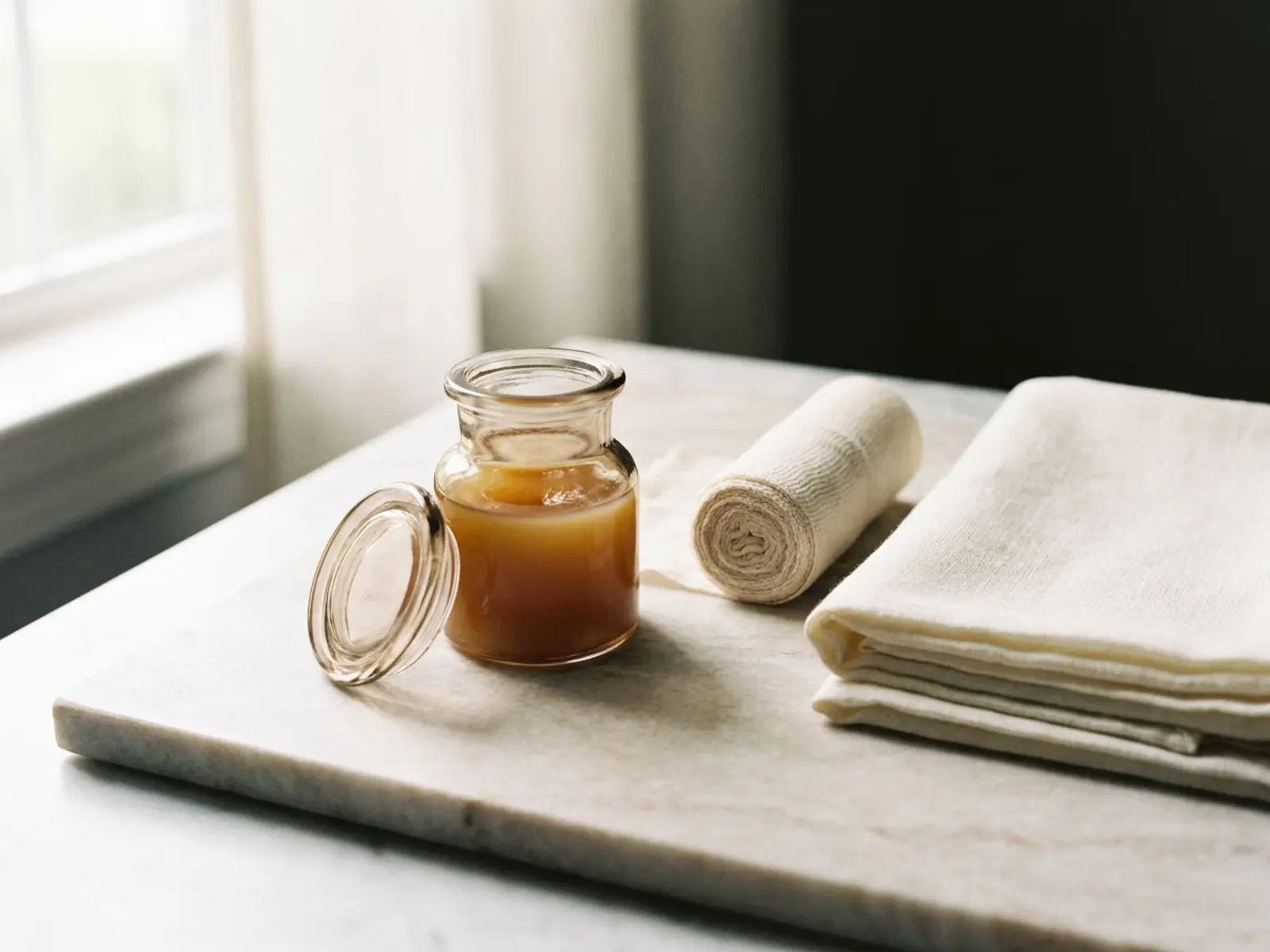
- Apply a thin layer of plain petrolatum (plain Vaseline). Check the label: petrolatum only, no added antibiotics or fragrances.
- Cover with a nonstick bandage, and change it daily or when wet.
- Repeat until healed. A moist, covered wound heals more comfortably and with less crusting than one left open to scab.
When to call a doctor
Most wounds heal without drama. Call your physician if you notice any of the following:
- Redness that spreads beyond the edge of the wound
- Pain that increases after the first two to three days instead of easing
- Pus or cloudy drainage
- Fever
- A sore that simply will not heal over several weeks — some skin cancers first appear as a small wound that never quite closes, and that deserves a professional look
This page is general education, not medical advice for your specific situation. If you are our patient, your surgeon’s aftercare instructions come first — call us at (972) 378-0620 with any question about a healing wound.
Common questions
Answers reflect the general case — a physician who can see the wound always beats a page that cannot.
Selected peer-reviewed literature
The data behind the answer.
- Smack DP, et al. Infection and allergy incidence in ambulatory surgery patients using white petrolatum vs bacitracin ointment: a randomized controlled trial. JAMA. 1996;276(12):972–977.
- American Contact Dermatitis Society Allergens of the Year 2000 to 2020 (neomycin, 2010; bacitracin, 2003).
- James WD. Use of antibiotic-containing ointment versus plain petrolatum during and after clean cutaneous surgery (letter). Journal of the American Academy of Dermatology. 2006;55(5):915–916.
If a spot will not heal
A wound that never quite closes is one of the ways skin cancer first announces itself. Diagnosing and removing skin cancer is what this practice does all day, every day.
Mohs Surgery for Melanoma
The most serious common skin cancer — treated here with same-day, margin-controlled Mohs surgery for appropriate cases.
Basal Cell Carcinoma
The most common skin cancer — slow to spread, but destructive locally. Mohs offers the most precise removal.
Squamous Cell Carcinoma
The second most common skin cancer — treated promptly because it can spread. High-risk tumors get immunostained margin control.
Request a Consultation
A question about a spot that worries you?
Call us, or send an appointment request — requests receive a call back within one business day.
(972) 378-06206100 Windhaven Parkway, Plano, TX 75093 · Mon-Thurs: 7:30-4 | Fri: 10-2