Pilonidal Disease & the Bascom Cleft Lift
Pilonidal disease is usually called a cyst. It is really an infection: abscesses and sinus tracts near the tailbone, where hair and debris work into the deep cleft between the buttocks and the area cannot heal. The result is a cycle — painful flare-up, drainage, wait for the next one.
Two things are worth saying plainly. It is nobody's fault: the cause is anatomy, hair, friction, and often heredity — not hygiene — and almost no one talks about it. And it is miserable. Sitting hurts. Many patients quietly plan their lives around it for years. You do not have to.
Traditional excision removes the infection but leaves the deep cleft that caused it, which is why the disease so often returns. The Bascom cleft lift is a lift and a shift: diseased tissue out, the closure shifted off the midline to skin that actually heals, and the cleft flattened so nothing traps hair and moisture again. Disease, infection, and anatomy — fixed in one outpatient operation, successful in 95 to 97 percent of patients in large published series.
You do not need a referral. Many of our pilonidal patients find us on their own — often after one or more operations elsewhere — and we welcome self-referred patients. Call the office or request an appointment online.
(972) 378-0620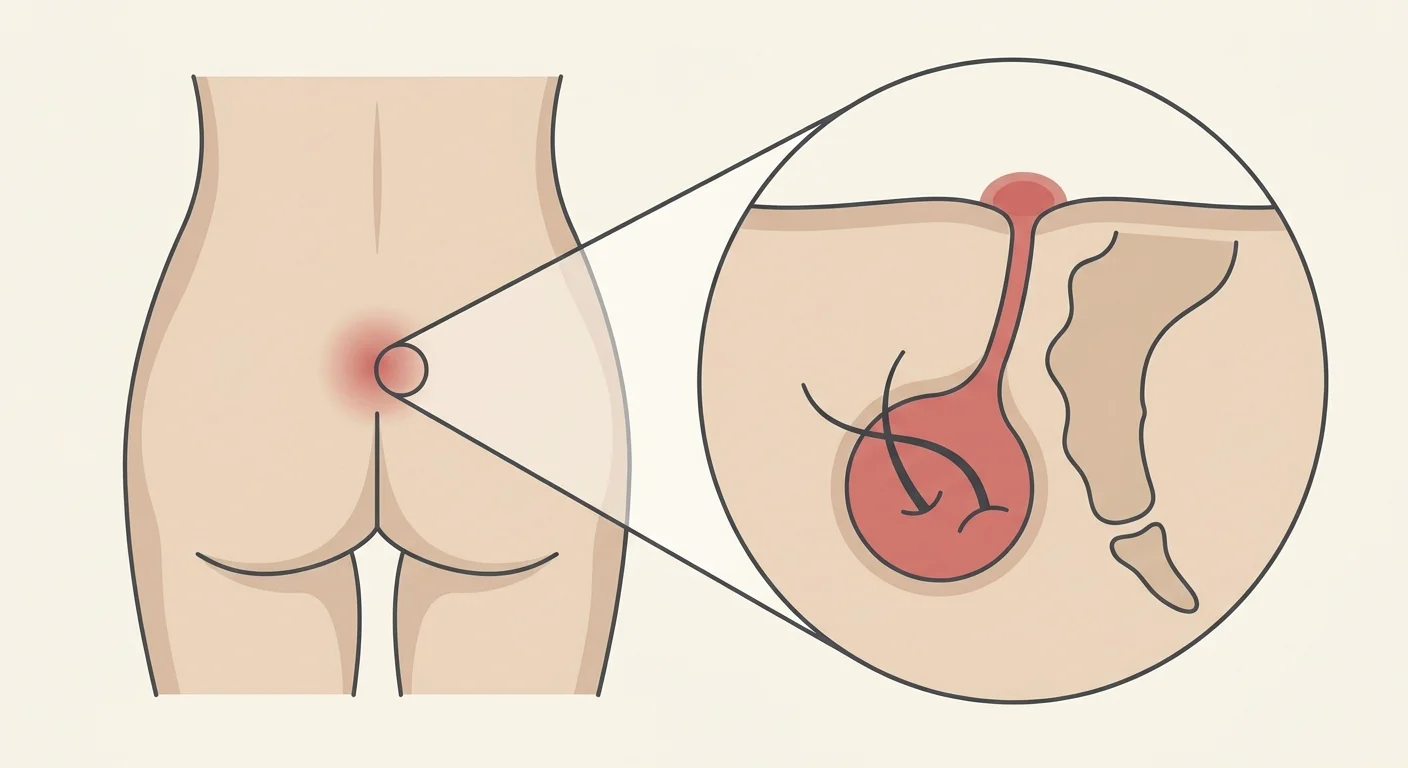
When to come in
- Recurring abscesses or drainage near the tailbone
- A pilonidal wound from previous surgery that has never fully healed
- Disease that has come back after excision or other procedures
- Pain with sitting that you have been told to live with
How we treat it
Bascom cleft lift
The definitive repair: diseased tissue removed, closure shifted off the midline, cleft flattened so the disease has nowhere to return.
Drainage of an acute abscess
An acutely infected abscess is drained first for relief; the cleft lift then addresses the cause once things settle.
Your surgeon will walk you through what to expect — including preparation and aftercare — before anything is scheduled.
Further reading: Why Does My Pilonidal Cyst Keep Coming Back? · Will a Pilonidal Cyst Go Away on Its Own?
A lift and a shift, drawn simply
Traditional excision vs. the Bascom cleft lift
| Compare | Simple (midline) excision | Bascom cleft lift |
|---|---|---|
| What it addresses | Removes the infected tissue, but the deep midline cleft — the cause — remains. | Removes the disease and reshapes the cleft, so the cause is corrected too. |
| Where the wound sits | In the midline crease — among the most difficult places on the body for a wound to heal. | Shifted off the midline to healthy, well-aired skin that heals reliably. |
| Healing | Open wounds commonly take months, often with daily packing and dressing changes. | Typically heals in weeks, with simple dressings and no packing. |
| Setting | Frequently a hospital operation. | Outpatient — you go home the same day. |
| Chance of cure | Recurrence reported as high as 30-50% in published series. | 95-97% success in large published series, including recurrent disease. |
Common questions
Answers reflect the typical course — your surgeon will go over the specifics of your own plan.
Related procedures
Cyst Removal
Complete excision of painful, infected, or bothersome cysts, including the sac, to help prevent recurrence.
Read moreBenign Lesion Removal
Seborrheic keratoses, skin tags, warts, and other benign growths, removed with attention to cosmetic outcome.
Read moreKeloid & Scar Revision
Surgical revision of raised, thickened, or uncomfortable scars to improve appearance and function.
Read moreRequest a Consultation
Talk to us about this procedure
Call the office and we will find a time that works.
(972) 378-06206100 Windhaven Parkway, Plano, TX 75093 · Mon-Thurs: 7:30-4 | Fri: 10-2